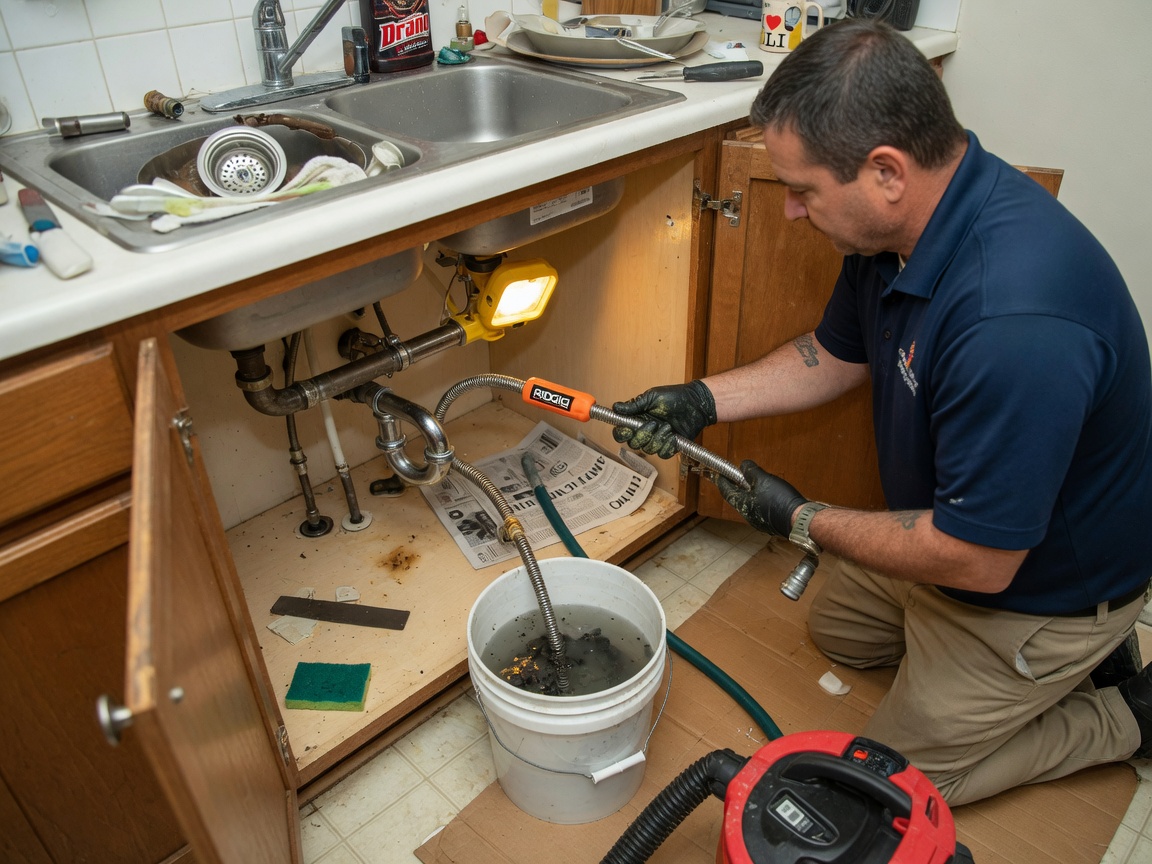
In Smithtown homes built before the 1980s, kitchen sink lines often run through cast iron or galvanized steel that narrows with decades of grease and soap scum. Hot summers increase cooking volume while cold winters send more grease down the drain before it can cool and solidify in the pipe. Techs working near the Smithtown Bull Statue or Caleb Smith State Park routinely find partial blockages that still allow slow drainage until a full stop occurs during holiday meal prep.
Nesconset and St. James properties with mature trees send roots toward the shallow sewer laterals common in Suffolk County. A kitchen sink clog here frequently signals the start of a larger root intrusion rather than a simple trap issue. Using only a hand auger on these lines risks pushing the clog deeper into the main without clearing the root mass, leading to repeat calls within weeks.
Hauppauge and Commack ranches from the 1960s often share a single 1.5-inch drain line between the kitchen and dishwasher. High-volume soap from modern pods leaves a film that traps food particles faster than older powder detergents. Homeowners who pour boiling water after each use can crack older PVC joints where the line exits the slab, turning a simple clog into a leak under the cabinet.
Seasonal shifts matter. After heavy spring rains the water table rises in low-lying Smithtown streets, adding pressure that pushes sediment back into kitchen traps. Winter freezes rarely affect indoor lines but do slow outdoor cleanouts, making access harder when a clog reaches the curb.
Technician insight
In Smithtown the thing that catches most people out with kitchen sink drain cleaning is the shared 1.5-inch line between the sink and dishwasher in 1960s ranches. They clear the trap, the sink drains again, then the next load of dishes pushes the grease back into the shared run and the problem returns the same week.
Slow kitchen sink near the Smithtown Bull Statue
Homeowner reported gradual slowdown after Thanksgiving cooking. Camera showed grease plug 12 feet down the cast-iron branch. Cable cleared the plug and an enzyme flush restored full flow. No root or pipe damage found, so no further excavation needed.
Kitchen Sink Drain Cleaning Services We Offer
✓Grease Buildup Removal
Breaks down cooking oil and fat deposits that accumulate in kitchen lines from daily meal prep in Smithtown homes.
✓Soap Scum and Debris Clearing
Removes hardened soap residue mixed with food particles that narrow pipes in Nesconset and St. James kitchens.
✓Root Intrusion Cutting
Cuts tree roots that enter older sewer laterals serving kitchens in Kings Park and areas near Caleb Smith State Park.
✓Dishwasher Drain Line Service
Clears shared lines between kitchen sinks and dishwashers common in 1960s Hauppauge and Commack ranches.
✓Slow Drain Prevention Flush
Applies enzyme treatment after mechanical cleaning to slow future grease and scum buildup in Suffolk County homes.
How it works
- 1
Initial Assessment
Inspect the sink, trap, and cleanout access while asking about recent cooking habits and any slow-drain history.
- 2
Mechanical Clearing
Run a cable through the kitchen line from the trap or exterior cleanout to break the clog without chemicals.
- 3
Camera Inspection
Check the line condition and confirm whether roots, grease, or pipe damage caused the stoppage.
- 4
Final Flush And Test
Flush with water and enzyme solution, then verify flow at multiple fixtures before leaving.
Pricing
Most kitchen sink jobs fall into a standard range based on whether the clog is at the trap, in the branch line, or has reached the main. Exterior cleanout access lowers labor time compared with working only from inside the cabinet.